
.png)
%202.png)
Think of pentesting as a security fire drill for your client's digital business. It’s a simulated cyberattack run by friendly security experts. Their job is to find weak spots and get inside before the bad guys do.
For MSPs, vCISOs, and compliance firms, this isn’t just another service. It’s a key part of modern cybersecurity that proves your client's defenses work and helps them pass audits.
What Is Penetration Testing for MSPs?

Penetration testing is the process of trying to break into a computer system or application to find security holes. This is very different from simply running an automated scan that just looks for known problems.
A true manual pentesting engagement relies on human creativity. Our certified testers, with certifications like OSCP, CEH, and CREST, think just like an attacker. They find ways to combine small issues into a major security breach, the kind of thing an automated tool would miss. This is the difference between a basic checkup and a real risk assessment.
Many IT providers still use automated scans, but this leaves a huge security gap. Think of an automated scan as a security guard who only checks if the doors are locked. A penetration test is like hiring a team to actually try and pick those locks or find an open window.
This hands-on approach is required to satisfy major compliance frameworks. For instance, SOC 2, HIPAA, PCI DSS, and ISO 27001 all demand this level of thorough testing. Offering pentesting helps you solve your clients' biggest governance, risk, and compliance (GRC) problems. The global penetration testing market is growing fast, expected to hit USD 6.25 billion by 2032. Learn more about the pentesting market growth and what it means for your business.
Why Manual Pentesting Beats Automated Scans
It's important for your clients to know a cheap scan is not a real pentest. When compliance is on the line, the difference is huge. An automated scan finds known issues, but a manual pentesting engagement uses human experts to find complex, unknown vulnerabilities.
While scans can be useful for quick checks, only manual testing provides the deep analysis needed to pass a serious audit. The problem is, building your own pentesting team is incredibly expensive. You need to hire security pros with certifications like OSCP, CEH, and CREST, who all earn high salaries.
This is where a white label pentesting partner is a game-changer. We become your dedicated pentesting team, working behind the scenes. You get all the benefits of offering affordable, expert-led services under your brand. As a channel-only company, we are 100% your partner, never your competitor.
What Are The Types of Pentesting?
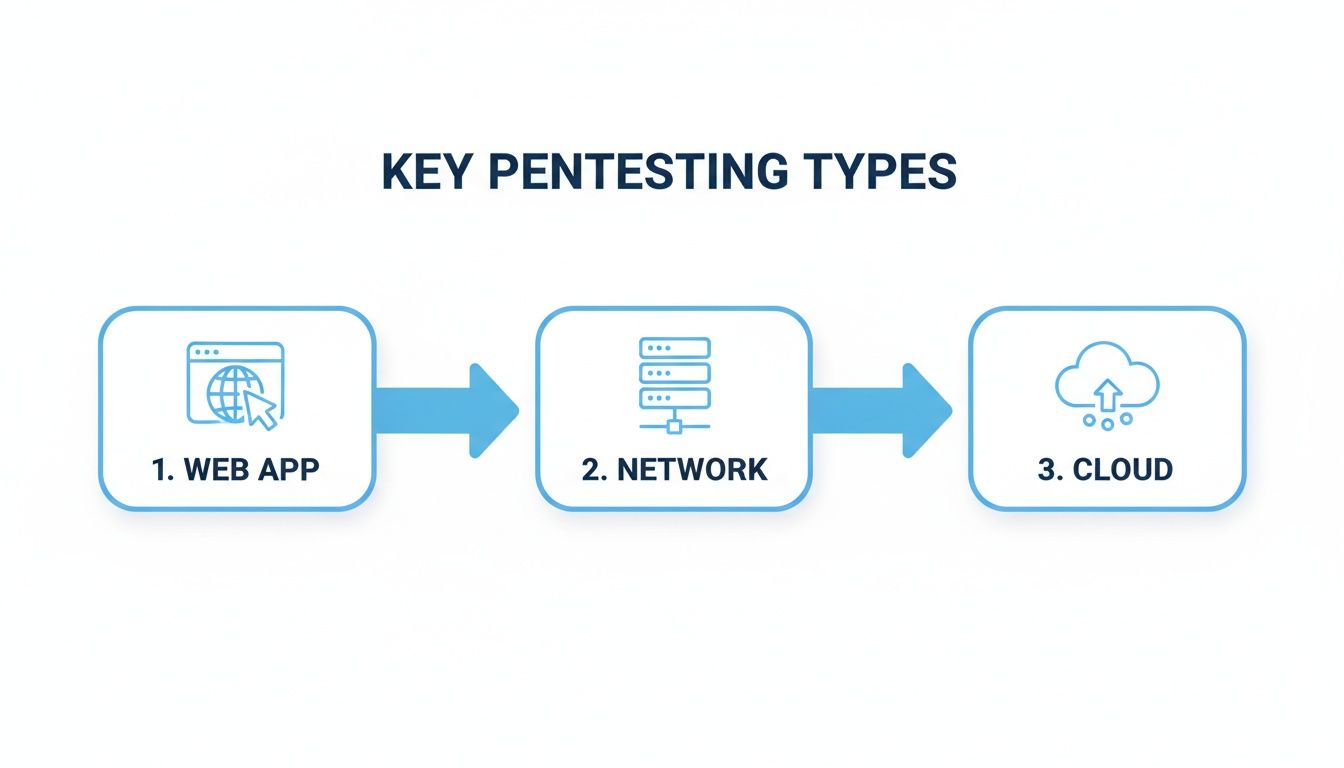
Not all pentests are the same. Just like a mechanic uses different tools for different jobs, different types of pentesting check specific parts of your clients' technology. Knowing the difference helps you guide clients toward the right security investments.
Web Application Pentesting is the most common type. Your clients' websites are their front door to the internet, making them a huge target. Our OSCP and CEH certified testers hunt for critical vulnerabilities like SQL injection that scanners often miss. This type of testing is absolutely dominant, making up 36% of all pentests because web apps are always exposed. Understanding the hands-on methods in web application security testing is key.
Internal and External Network Pentesting are also crucial. An internal test simulates what happens after an attacker gets inside. This is a must-have for compliance like PCI DSS and HIPAA. An external test looks at the network from the outside, just like a real attacker would.
Cloud and Mobile Application Pentesting are growing fast. Cloud testing focuses on platforms like AWS and Azure, looking for common misconfigurations. Mobile testing digs into iOS and Android apps to find vulnerabilities that could expose user data. We are a channel-only partner, providing these tests as a seamless part of your services. You can offer clients affordable and fast testing without worrying about us competing for your business.
Our Simple and Fast Pentesting Process
A good penetration test shouldn't be a mystery. For MSPs and vCISOs, a clear process is everything. It lets you set clear expectations with your clients and show them the value you provide.
Our pentesting process is built around clarity and speed. We’ve cut out the long lead times and confusing talk you see with other providers. Instead, we break it down into three simple phases so you always know what’s happening.
First is scoping. This is where we work with you to define the rules of the test. We decide which applications or networks to test and set clear goals. This makes sure the final report directly addresses your client's unique risks and compliance needs, whether for SOC 2, HIPAA, or PCI DSS.
Next is the manual pentesting phase. Our certified ethical hackers get to work. Our team, with certifications like OSCP, CEH, and CREST, doesn't just run a scanner. They actively try to exploit vulnerabilities, thinking like a real attacker. This human-led approach gives you a true risk assessment of your client's security. Learn more about our pen testing methodology.
Finally, we deliver a clear and actionable report. As a reseller, this is the most important part for you. We provide a comprehensive report that is ready for you to brand. It includes an executive summary for non-technical leaders and detailed technical findings for the IT team. Our process is designed to be affordable and fast, with reports delivered on a timeline scoped to the engagement.
Pentesting for Compliance

For many of your clients, a penetration test is a hard requirement on their compliance checklist. Think of a pentest report as the ultimate proof for an auditor. It shows your client is actively finding and fixing security gaps.
This is where you, as an MSP or vCISO, become essential. By connecting manual pentesting to major frameworks, you solve a massive problem for your clients. You position your services as the clear answer to their governance, risk, and compliance (GRC) needs.
For a SOC 2 report, auditors need to see that security controls are effective in the real world. For PCI DSS, Requirement 11.4 demands regular internal and external penetration testing. A simple scan won't work. Offering an affordable and fast pentesting service makes you the perfect partner for these clients.
The HIPAA Security Rule requires a thorough risk assessment. Pentesting is the most direct way to satisfy this by showing exactly where vulnerabilities are. The ISO 27001 framework also requires organizations to manage technical vulnerabilities, and a pentest is the best way to meet this control. We are a channel-only partner. Our OSCP, CEH, and CREST certified experts work for you, never competing with you. Navigating the world of regulations is key, and this guide to data security compliance can offer more context.
Why MSPs Choose White Label Pentesting
As an MSP or vCISO, offering penetration testing is a logical next step. But building your own team is a huge challenge full of expenses and risks. This is where a partnership model changes the game, provided you vet the penetration testing provider before you put your name on its report.
White label pentesting is the fastest way to deliver top security services under your own brand. You can skip the headaches and get straight to growing your business. Building a team is wildly expensive. You have to pay for huge salaries for certified experts, expensive software, and constant training.
Partnering with a white label pentesting provider removes all these costs. We compared the main options, from boutique firms to automated platforms, in the best penetration testing companies for MSPs. You get instant access to a certified team for a simple fee. This makes offering pentesting testing services affordable and profitable from day one.
Speed is everything. Your clients have tight deadlines for audits like SOC 2. We built our process to be fast. We are a channel-only company dedicated to supporting you. We never compete with you for your clients. Our streamlined approach means we deliver a full report on a timeline scoped to the engagement. This incredible speed is a massive competitive advantage. You can check out our deep dive on how white label pentest delivery works.
Finding The Right Pentesting Vendor Service
Picking a pentesting provider is a big deal because your reputation is on the line. A bad choice can lead to weak reports and unhappy clients. You need a partner who acts like an extension of your own team.
First, you need to understand how they do the tests. Many providers sell "pentesting" that's just a glorified scan. For clients needing to meet SOC 2 or PCI DSS requirements, this is a major problem. You should ask if their testing is mostly manual and what methodology they follow.
Next, you need to know who is doing the testing. Certifications prove a pentester knows their stuff. Look for a team with top-tier certifications like Offensive Security Certified Professional (OSCP), Certified Ethical Hacker (CEH), and CREST Registered Penetration Tester (CRT).
Finally, you have to understand the business relationship. A provider who also sells to end-users is a competitor, not a partner. Ask them if they offer a white label reseller program and if they are a channel-only company. A "yes" here is huge. It confirms they will never go behind your back. Finding a provider that is affordable, fast, and built for partners is the winning combo. Learn more about what makes a great pentest partner.
Contact us today to learn more about our reseller program.

.avif)
.png)
.png)
.png)

