
.png)
%202.png)
Preparing for a SOC 2 audit can seem like a massive project, especially for Managed Service Providers (MSPs), vCISOs, and GRC firms. You're busy managing multiple clients and their unique security needs. The good news is, it doesn't have to be a painful process with overpriced consultants and slow timelines. The best way to have a smooth audit is to use a clear, step-by-step plan.
We know the compliance industry has problems like high prices, weak testing methods, and long waits for reports. We built our company to be the solution. As a channel-only partner, we never compete with our MSP or vCISO clients. Our mission is to provide affordable, fast, and thorough manual pentesting with certified experts (OSCP, CEH, CREST) to help you on your compliance journey.
This SOC 2 compliance checklist breaks down the eight most important areas you need to focus on. We'll cover everything from access controls to risk assessment. Think of this as your simple guide to getting ready for the audit, making your security stronger, and showing clients you take data protection seriously.
Master SOC 2 Access Control and Authentication
The first step in any SOC 2 compliance checklist is setting up strong access controls. This is like the front door to your house: it makes sure only the right people get in. For MSPs and vCISOs, this is extra important because you're protecting both your company's systems and your clients' sensitive data. This control helps you meet the Security and Confidentiality requirements of SOC 2.
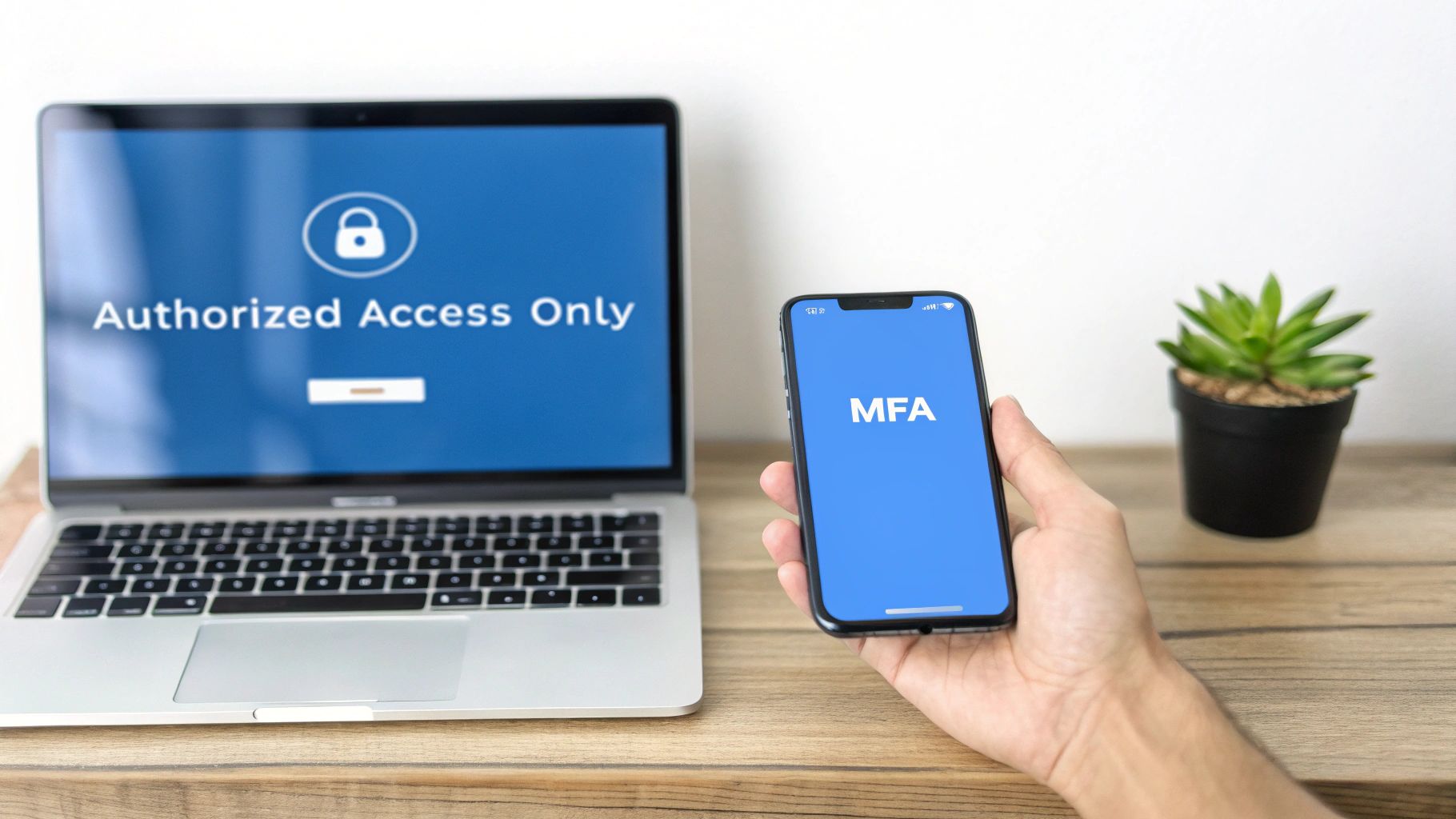
Good access control uses several layers of security. This includes multi-factor authentication (MFA) to prove who you are and role-based access control (RBAC) to give people access only to what they need for their job. An auditor will want to see proof that you are using these tools to keep data safe. For a deeper look at the entire process, check out a practical guide to achieving SOC 2 compliance.
To stay ready for an audit, you should have a process to automatically remove access when someone leaves the company. You also need to review who has access to your systems every quarter. These simple steps make a big part of the audit much easier to handle.
Formalize Your SOC 2 Change Management Process
Next on your SOC 2 compliance checklist is change management. This is just a fancy way of saying you have a formal process for making changes to your systems. For MSPs and vCISOs, this is key to keeping client environments stable and secure. It supports the Security and Availability parts of SOC 2 by preventing unauthorized changes that could cause problems.
A good change management process includes a formal request, testing, and approval before any changes go live. This creates a clear trail that shows an auditor you have control over your environment. For example, before making a change to a client’s cloud setup, you would have a senior engineer review and approve it, with the entire process tracked in a system like Jira.
To stay audit-ready, create templates for common changes, like applying security patches. Make sure you also have a documented process for emergency changes. This shows an auditor that you can maintain control even when things are moving fast.
Implement SOC 2 Data Protection and Encryption
Protecting data is a critical part of your SOC 2 compliance checklist. This means keeping data safe whether it's stored on a server (at rest) or being sent over the internet (in transit). For MSPs and vCISOs, strong encryption is a must-have. It protects sensitive client information and pentesting reports from falling into the wrong hands, supporting the Security, Confidentiality, and Privacy requirements.

Effective data protection means using strong encryption standards like AES-256 and managing your encryption keys securely. For example, you should use full-disk encryption on all company laptops to protect data if a device is lost. You also need to have a clear policy on how you classify and handle different types of data. To learn more, explore these methods for securing PII for privacy and compliance.
To make sure you are always audit-ready, make data encryption the default for all your systems. Use secure ways to share sensitive client files, like an encrypted portal, instead of email. Document your key rotation procedures, and you’ll have everything an auditor needs to see.
Strengthen SOC 2 Incident Response and Management
A key part of any SOC 2 compliance checklist is having a plan for when things go wrong. An incident response (IR) plan shows you can detect, respond to, and recover from security incidents. For MSPs and vCISOs, this demonstrates that you can protect your clients and your own business. This directly supports the Security criteria by showing you can handle system failures and security events.
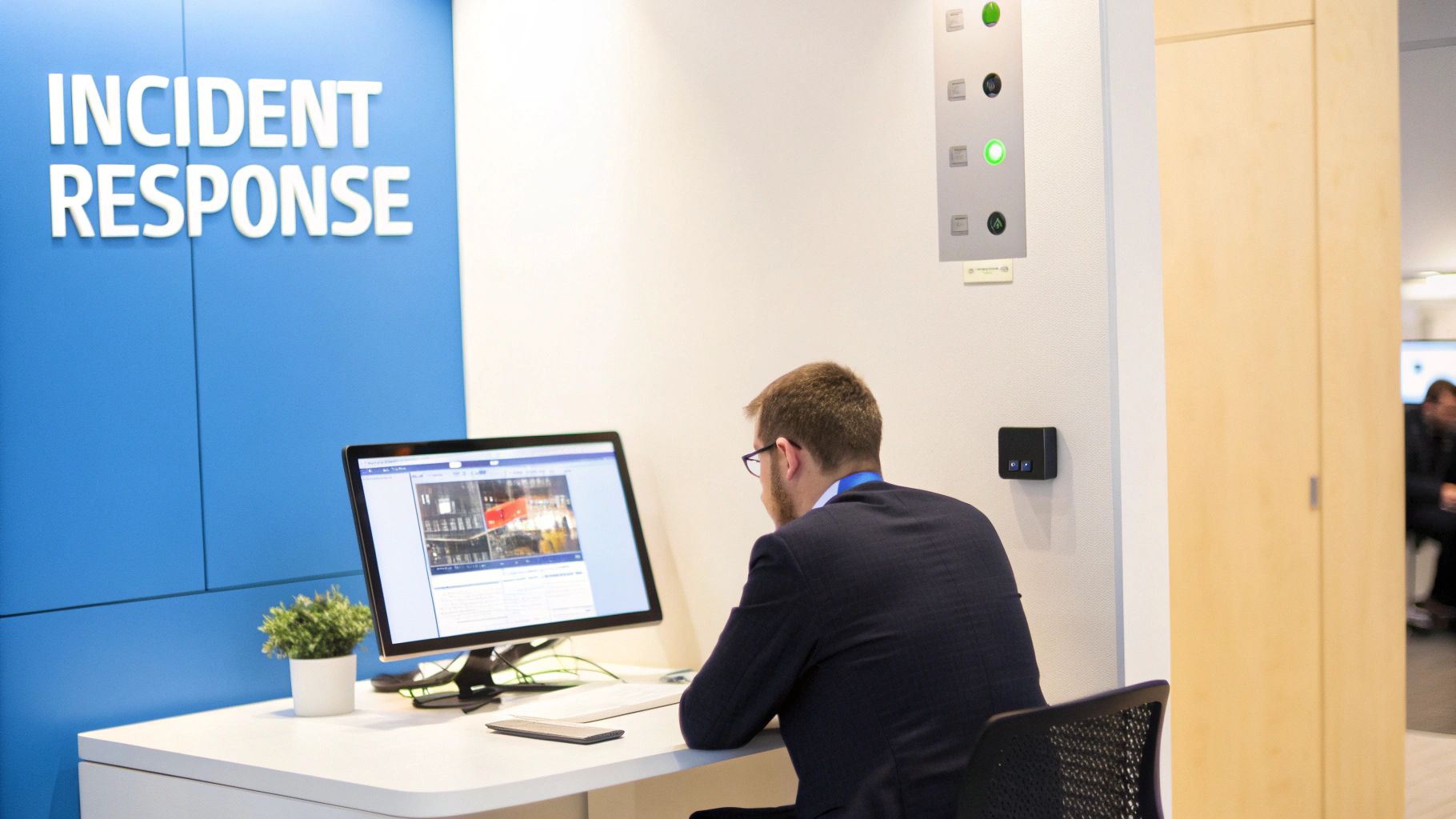
A strong IR plan is built on tools that collect and analyze security logs from all your systems. When an MSP performs a penetration testing engagement, your security tools should be able to tell the difference between the test and a real attack. Documenting how you handle incidents, from the first alert to the final fix, provides the evidence auditors need. You can learn more about specific SOC 2 audit requirements here.
To prepare for an audit, you should run and document regular IR drills, like simulating a ransomware attack. This proves your team knows what to do in a real emergency. This turns a compliance task into a powerful way to improve your security and show your value to clients.
Unify Logical and Physical Security Controls
Securing your digital systems is important, but a complete SOC 2 compliance checklist also covers the physical world. Logical and physical security controls work together to protect your offices, data centers, and equipment from unauthorized access. For MSPs, this means keeping the areas where you conduct penetration testing and other sensitive work secure. This supports the Security and Availability criteria.
Effective security combines physical barriers, like locked doors and cameras, with digital rules, like network firewalls. For example, when you perform an internal penetration test, the test network must be completely separate from your main corporate network. This prevents any accidental issues and shows an auditor that you operate in a controlled, professional manner.
To ensure you are audit-ready, conduct regular physical security checks of your facilities. Keep detailed visitor logs and make sure your network diagrams are always up to date. These simple procedures prove that your security controls are working every day.
Enhance SOC 2 Monitoring and Logging Capabilities
A core part of any SOC 2 compliance checklist is having comprehensive monitoring and logging. This means keeping a detailed record of what happens on your systems, including who did what and when. For MSPs and vCISOs, this is how you show auditors and clients you can detect and investigate potential security issues. This supports the Security and Availability requirements of SOC 2.
Good logging isn't just about collecting data; it's about analyzing it. You need to use a tool to bring all your logs into one place to spot suspicious activity. For instance, when you perform a white label pentesting engagement for a client, you must log all activity to prove you stayed within the agreed-upon scope. This provides clear, auditable evidence for compliance.
To stay audit-ready, set up automated alerts for high-risk events, like someone trying to log in and failing multiple times. Also, make sure to document that you are reviewing these logs regularly. This active approach shows an auditor that you are serious about security.
Formalize Your SOC 2 Risk Assessment Process
A formal risk assessment and vulnerability management program is a must-have for your SOC 2 compliance checklist. This process is about finding, evaluating, and fixing security risks in your systems. For MSPs and vCISOs, this shows clients that you are proactive about security. This supports the Security criteria by identifying weaknesses before they can be exploited.
A mature program uses tools to regularly scan for vulnerabilities and a structured process to prioritize and fix them. For example, an MSP would scan its own systems every quarter, document the findings, and assign deadlines for fixing any issues. This creates a repeatable process that auditors love to see, as it shows you are managing risk effectively.
To ensure you are audit-ready, you should have an independent third party conduct a penetration testing engagement on your own systems every year. This external validation proves your security controls are working. Maintaining a clear risk register shows a continuous cycle of improvement and helps satisfy auditors for frameworks like ISO 27001 and PCI DSS as well.
Implement SOC 2 Personnel Security and Training
An often-overlooked part of the SOC 2 compliance checklist is the people. Personnel security procedures ensure that the people you hire are trustworthy and trained to handle sensitive data. For MSPs and vCISOs, your team is your first line of defense. This control supports the Security and Confidentiality criteria by reducing the risk of insider threats.
This control is about building a security-first culture from day one. It includes doing background checks before hiring, providing annual security training, and having a formal process for when an employee leaves. For a reseller of specialized services like penetration testing, this also means verifying that your pentesters have top certifications like OSCP, CEH, or CREST.
To stay audit-ready, create a formal process for the entire employee lifecycle. Require all new hires to sign confidentiality agreements and maintain records of their background checks and training. This turns your HR processes into strong, verifiable security controls that an auditor can easily check.
Partner with MSP Pentesting to Accelerate Compliance
Working through a SOC 2 compliance checklist is a big step toward building a mature security program and earning client trust. This guide has broken down the core areas, from access control to risk assessment. By using this checklist as a continuous guide, you can turn compliance from a headache into a real business advantage.
The journey requires a clear understanding of each security control and how it applies to your business. We've covered the key policies, procedures, and evidence you'll need for a successful audit. Remember the importance of monitoring and logging, strong encryption, and a solid incident response plan. Each piece works together to create a strong security posture that auditors will approve.
Ultimately, SOC 2 compliance is about proving your controls work consistently. This requires not just writing policies but also testing them. A risk assessment can find potential weaknesses, but how do you prove your defenses work against a real attack? This is where independent, third-party penetration testing is essential. It provides the proof auditors need to see.
Key Insight: A successful SOC 2 audit isn’t just about having the right documentation. It’s about providing irrefutable proof that your security controls work as intended under pressure. Penetration testing provides that essential, independent validation.
For MSPs, vCISOs, and GRC firms, the challenge is finding a partner who can deliver this validation without competing with you. The traditional pentesting market has high prices, long wait times, and firms that might try to steal your clients. We built our company to solve this problem. At MSP Pentesting, we are a 100% channel-only partner. We never sell directly to your clients, so you always remain their trusted advisor.
Our team of OSCP, CEH, and CREST certified experts provides fast, affordable, and high-quality manual pentesting that you can resell or white-label. We deliver the detailed reports you need to satisfy auditors for SOC 2, HIPAA, ISO 27001, and PCI DSS compliance. By partnering with us, you can easily add a critical compliance service to your offerings, strengthen client relationships, and help them through the SOC 2 compliance checklist.
Ready to turn your SOC 2 compliance checklist into a streamlined, profitable service for your clients? Partner with MSP Pentesting for fast, affordable, and channel-exclusive white-label pentesting. See what the finished report looks like and how it helps you accelerate compliance and build stronger client relationships.

.avif)
.png)
.png)
.png)

