
A letter of attestation is a short, signed statement from the firm that performed the work, confirming that a penetration test was carried out, on which systems, and on what dates. It is not a certification and it does not declare a network secure. It is evidence that testing happened, which is what an auditor, customer, or insurer is usually asking for. Because only the firm that ran the test can issue one, the practical first step is scoping the penetration test itself.

Understanding What a Pentest Letter of Attestation Is
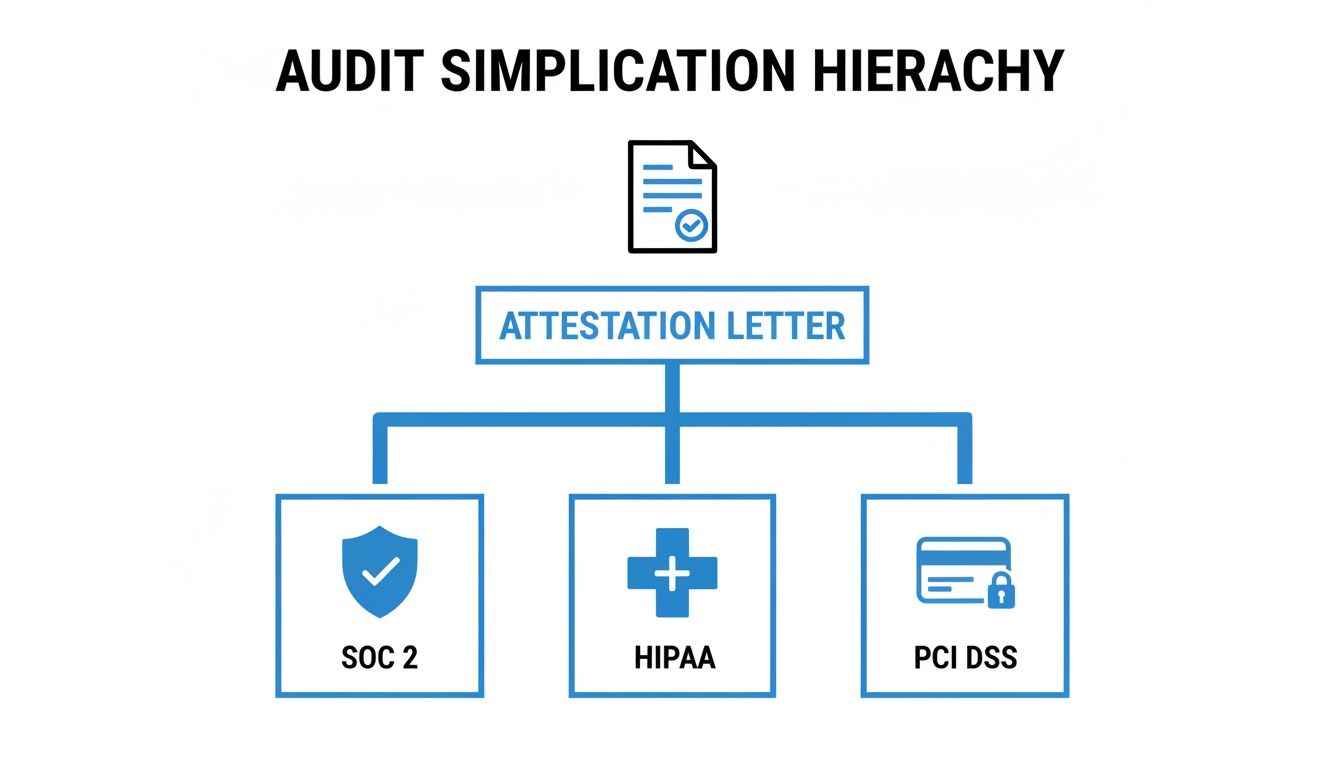
For MSPs and vCISOs, a letter of attestation is an incredibly useful tool. It provides simple, clean proof of security testing, which is exactly what auditors need for compliance frameworks like SOC 2, HIPAA, and PCI DSS. It’s a high-level summary that bridges the gap between deep technical work and business needs.
Imagine your client is going through a tough risk assessment. Instead of giving the auditor a dense, 100-page report full of sensitive vulnerability data, you provide a clean, one-page letter. This document instantly confirms a qualified third party performed a manual pentesting engagement, states the scope and dates, and gives a professional opinion on the security posture.
This helps you answer an auditor's main question, "Did you test your systems?", quickly and with authority. That kind of efficiency is a lifesaver for GRC firms and CPAs who need to verify security controls without getting lost in technical jargon.
What Are the Key Parts of an Attestation Letter?
A real letter of attestation isn’t just a quick note saying "we did a test." It’s a formal document where every part has a specific purpose, especially when an auditor is looking at it. For any MSP or vCISO, knowing what to look for helps you and your clients spot a legitimate attestation in seconds.

First, the letter must state the client's full legal name and the exact start and end dates of the penetration testing. This creates a precise "point-in-time" snapshot that auditors need to verify testing aligns with the audit period for frameworks like SOC 2 or ISO 27001.
Next is the scope, which is non-negotiable. The letter needs to spell out exactly what was tested, such as specific IP address ranges or web application URLs. This proves the assessment was targeted and relevant to the systems under review for compliance.
Equally important is the methodology. The letter must confirm that manual pentesting was conducted by certified professionals (like OSCP, CEH, or CREST). This adds a layer of credibility that auditors respect, as manual testing finds the complex flaws that automated tools miss.
For our reseller partners, we provide these professional, white-labeled letters quickly. That means you can meet your client’s tight deadlines with an affordable and authoritative document that gets the job done.
How Attestation Letters Simplify Compliance Audits
No one enjoys a compliance audit. For companies facing SOC 2, HIPAA, PCI DSS, or ISO 27001, proving you’ve done a penetration test is mandatory. A letter of attestation acts as an express pass for this part of the audit, giving auditors the simple proof they need without extra noise.
Auditors are busy and use these letters for quick, verifiable proof that a required security control was completed. When that letter comes from a reputable firm with certified pentesters (OSCP, CEH, CREST), it carries instant weight. It shows the testing was serious, professional, and thorough.
For GRC pros and vCISOs, this document is a go-to tool. It proves due diligence without forcing a non-technical stakeholder to get lost in the weeds of a full report. Healthcare organizations often need a specific HIPAA compliance attestation document to confirm their commitment to security.
The speed of delivery is also a huge benefit. A compliance deadline doesn't wait, and an attestation letter can often be delivered almost immediately after testing. This gives you instant proof to keep the audit moving forward for frameworks like SOC 2 while the detailed report is finalized.
Attestation Letter vs Full Pentest Report Explained
It is critical to understand that a letter of attestation and a full pentest report are completely different documents. Mixing them up during a compliance audit can cause major problems. Think of one as a public-facing summary and the other as a top-secret internal guide.
The letter is a clean announcement for outsiders like auditors, partners, or customers, saying, "Yes, a security test happened on these dates." The full report is the detailed diagnostic for your client’s technical team. It lists every vulnerability, its severity, and the exact steps to fix it, so it must be kept strictly confidential. If you want to see how that document is put together before you commission one, our penetration test report template lays out the sections auditors expect to find.
The letter of attestation confirms that you did the work, while the full report details what was found and how to fix it. Both are essential, but for very different reasons and audiences. For MSP and vCISO partners, understanding this distinction is key to delivering real value.
We provide both as part of our affordable, channel-only manual pentesting service. You get a polished, white label letter to satisfy auditors and a detailed report to help your clients genuinely strengthen their security posture. You can learn more about how we deliver attested 3rd party manual pentesting for our partners.
Why MSPs Should Use White Label Pentesting
Your clients see you as the security expert, but building an in-house penetration testing team is difficult and expensive. It costs a lot, finding talent takes forever, and you constantly need to invest in new tools and training. This is where a channel-only partner completely changes the game for your business.
Our white label pentesting service was built specifically for MSPs, vCISOs, and other resellers. It lets you offer legitimate, third-party attestations and comprehensive security testing under your own brand. You instantly become a security authority and open a profitable new revenue stream without the operational headaches.
We are a 100% channel-only partner, which means we never sell directly to your clients or compete with you. We are your silent technical partner, staffed with OSCP, CEH, and CREST certified pentesters, so you can focus on building client relationships. You deliver a professional letter of attestation and a detailed report branded as your own, solving your client’s compliance challenges.
The managed service industry often suffers from inflated prices and long lead times for security tests. We built our model to fix that. It’s all about being affordable and fast, so you can protect your margins while giving your clients great value. To learn more, check out our guide on white label penetration testing for partners.
How To Use Attestation Letters for Compliance
Getting a letter of attestation is a great first step, but knowing how to use it unlocks its real value. For an MSP or vCISO, this document is your key to helping clients sail through compliance audits. A few best practices can make all the difference for your penetration testing investment.
First, always double-check the scope. Before you hand the letter to an auditor, make sure the systems and IPs listed match exactly what's being audited. Any mismatch can raise a red flag and cause delays for frameworks like SOC 2 or PCI DSS.
Next, verify the credentials of the firm that issued the letter. An attestation is only as credible as the company signing it. Ensure the pentesting was performed by certified professionals (OSCP, CREST) from a reputable firm.
Finally, treat the letter of attestation like any other formal business record. Store it securely where you can access it quickly when needed. Following sound document management best practices makes life easier when you need to produce the right evidence for an audit. When you follow these guidelines, the letter becomes a strategic tool that proves a proactive approach to security.
Common Questions About Pentest Attestation Letters
We get many questions from our MSP and vCISO partners about these letters. Here are the straightforward answers you need to guide your clients effectively.
How Long Is an Attestation Letter Good For?
Think of a letter of attestation as a snapshot in time. It captures the client's security posture on the day the penetration testing was completed. For most major compliance frameworks, like SOC 2 or HIPAA, these tests and their attestations are required annually to prove ongoing security diligence.
Can We Still Get a Letter if You Find Vulnerabilities?
Absolutely. In fact, a letter that acknowledges findings adds credibility. The purpose of an attestation letter is to prove a thorough manual pentesting engagement occurred, not to claim a network is perfect. It tells auditors you have a mature risk assessment process and are actively working to improve security.
Why Not Just Hand Over the Full Report to Auditors?
The full report is a long, technical document filled with sensitive data about your client's vulnerabilities. Handing it over to an auditor creates a huge, unnecessary risk. The attestation letter is the clean, auditor-friendly summary that gives them exactly what they need for PCI DSS or ISO 27001 without oversharing sensitive information.
Ready to give your clients fast, credible attestation letters under your own brand? MSP Pentesting is channel-only, so we never sell to your clients, and every letter and report ships under your logo. Request a pentest quote and we will scope the test that produces the letter.

.avif)
.png)
.png)
.png)

