
.png)
%202.png)
Everyone is focused on digital threats, but many big security breaches start with something surprisingly simple. An unlocked door. A copied ID badge. An employee who is a little too trusting.
This is the world of physical pentesting. It is the practice of testing real-world, physical defenses to find gaps before an attacker does. It’s a vital service that uncovers risks your firewalls and antivirus software will never see.
Why Offer Physical Pentesting as an MSP?
For most MSPs, vCISOs, and GRC firms, the security conversation is almost always about networks and applications. But what about your clients' offices, data centers, and server rooms? That is a huge piece of their attack surface.
A solid digital defense doesn't mean much if someone can just walk in and plug a malicious USB drive into a server. This is where a physical penetration test opens up a massive and often overlooked opportunity for your business.
This isn't just a niche service. The global market for physical penetration testing hit USD 1.48 billion in 2024, and it's growing fast. We've all seen the headlines. The Target data breach cost the company over $300 million and started with credentials stolen from an HVAC vendor, then used remotely. It’s a reminder that ignoring physical security can have devastating consequences. You can learn more about the growing market for these essential security assessments.
Drive Revenue with Compliance and Trust
Compliance is a huge driver for physical security. Frameworks like SOC 2, HIPAA, PCI DSS, and ISO 27001 all have strict requirements for physical controls. Your clients in healthcare, finance, or any regulated industry need to prove they are protecting sensitive data in the real world.
By offering a physical pen test, you are not just selling another service; you are providing a more complete risk assessment. You help clients satisfy auditors and show they have a mature security program. When you can point out weaknesses, you deliver tangible value that solidifies your position as their trusted advisor.
What is the Difference Between Physical and Digital Pentesting?
Both are two sides of the same coin. A truly secure organization needs to be resilient against someone trying to kick down the door and someone trying to break in through the firewall.
A Channel-Only Solution Built for Resellers
We know the managed services world. You are dealing with inflated prices for security services, vendors that take weeks to deliver a report, and the risk of a partner trying to poach your clients. We built our entire model to fix that problem.
As a channel-only partner, we work exclusively through resellers like you. We will never compete for your clients. Our approach is simple: we provide affordable, manual pentesting performed by certified experts (OSCP, CEH, CREST). You get a fast turnaround on a comprehensive report that you can deliver under your own brand. This white label pentesting service lets you add a high-margin revenue stream without the massive overhead.
Understanding Core Physical Pentesting Tactics

A physical penetration test is not your typical tech audit. Think of it more like a real-world spy mission for your client's business. The goal is simple: could an unauthorized person walk into their building and access sensitive data? An automated scanner cannot answer that question; you need a hands-on, manual pentesting approach.
Our certified professionals use a range of human-centric tactics to uncover these real-world risks. The entire engagement is designed to test defenses in a controlled, safe manner. This is all handled by experts holding top-tier certifications like OSCP, CEH, and CREST.
Reconnaissance Is the Starting Point for Every Test
Before our pentesters even set foot near the target building, they are deep in reconnaissance. It is basically the homework stage of the operation. They dig up publicly available information on the company, its employees, and its physical locations.
This initial work is crucial for planning a successful pen test. It gives the tester a clear picture of the environment and helps them spot potential entry points. A big part of this is also understanding existing security measures, like their video surveillance camera systems.
Social Engineering Is the Art of Persuasion
One of the most powerful tools in penetration testing is social engineering. At its core, this is the art of manipulating people to give up access or information they should not. It plays on human psychology, not technical glitches.
Picture a pentester showing up dressed as an IT technician or a fire inspector. With a confident demeanor and a believable story, they can often get employees to hold doors or grant access. You can get a deeper look at this powerful technique in our guide on social engineering assessments. A successful social engineering attempt flags a gap in security awareness training.
Gaining Access Through Common Pentest Techniques
With the homework done, the next move is to get inside. Our pentesters use several proven methods to test how solid a building's perimeter really is.
- Tailgating: The tester just follows an authorized employee through a secure door before it swings shut. It works because most people are conditioned to be polite.
- Lock Bypass: This involves using specialized tools to non-destructively open locks on doors, filing cabinets, or server racks.
- Badge Cloning: Using RFID cloning gear, a tester can create a perfect copy of an employee's access card by getting close enough to scan it.
- Device Tampering: Once inside, a primary objective is getting on the network. This might mean plugging a malicious device into an open network port.
The specific techniques we use are tailored to the engagement's scope and the client's compliance requirements, whether for SOC 2, HIPAA, or PCI DSS. Each successful breach provides concrete evidence for the final risk assessment report.
The Business Impact of Physical Security Gaps
Your client's firewall is solid. Their network is locked down. But none of that matters if an attacker can just walk through the front door. Many businesses get so caught up in digital threats they forget a propped-open door can bring the entire security program down.
An attacker dressed as a delivery driver slips in behind an employee. They find an empty desk, plug in a malicious USB drive, and ransomware starts crawling across the network. This is not a movie scene; it happens more often than you would think.
How an Unlocked Door Leads to Total Compromise
That one physical breach creates a devastating chain reaction. A single unauthorized entry can lead to massive data theft, crippling downtime, and a PR nightmare. Your client is suddenly in a full-blown business crisis.
For clients trying to meet standards like SOC 2, HIPAA, or ISO 27001, it gets even worse. Auditors scrutinize physical access logs, visitor policies, and camera footage. A failed physical security check means a failed audit, huge fines, and losing certifications. A physical security gap is a direct threat to business continuity.
The Real Costs of Ignoring Physical Security
The financial fallout from a physical breach goes way beyond the initial cleanup. You have to account for the cost of downtime, data recovery, and regulatory fines. As an MSP or vCISO, letting these risks slide can destroy your credibility.
This is exactly why a physical pentest is so critical. It moves the conversation from a theoretical "what if" to a tangible "here's how it could happen." Our fast, affordable penetration testing services give you the clear, actionable report you need to secure those physical weak spots. The physical pentesting market is growing, but many companies avoid frequent testing because they think it is too expensive. You can read more about the surging demand for physical penetration testing services.
Secure the Human Element in Your Client's Defense
At the end of the day, a physical penetration test does more than just check locks and cameras. It puts the human element of your client's security to the test. So many successful breaches hinge on social engineering.
Our manual pentesting approach, performed by OSCP, CEH, and CREST certified experts, simulates these real-world attacks in a safe, controlled way. By partnering with us for white label pentesting, you can offer this essential service under your own brand. You become the one who finds and helps fix these fundamental risks.
Our Simplified Physical Pentest Engagement Process
Trust is everything. Bringing in a third party for a physical penetration test takes a leap of faith. That is why we designed our process to be transparent, professional, and simple from start to finish. We are here to solve an industry problem: long lead times and confusing methodologies.
Defining the Scope and Rules of Engagement
Every solid pen test kicks off with a clear plan. Before a single door is jiggled, we work directly with you to define the scope. This is where we identify target locations and agree on clear rules of engagement.
This step is critical for a safe and effective test. It means our certified pentesters know exactly what is in scope and what is off-limits. This diagram shows what happens once a physical breach is successful.
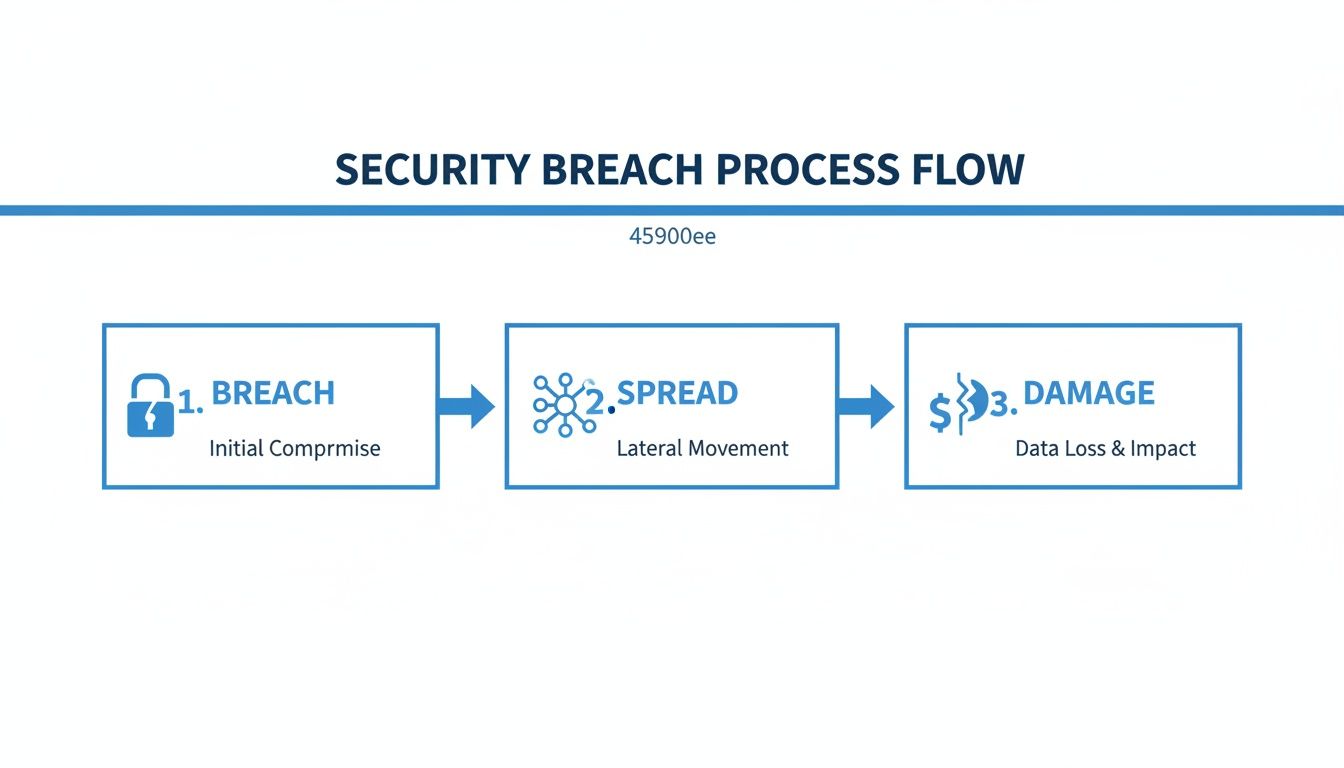
As you can see, a single physical weak point can become the foothold an attacker needs to spread across the network.
Discreet Evidence Collection by Certified Experts
Once the rules are set, our team gets to work. Our pentesters hold certifications like OSCP, CEH, and CREST. They are experts at quietly gathering evidence, simulating what a real attacker would do.
Every finding is documented with photos and detailed notes. This evidence is the backbone of the final report, giving you proof of the vulnerabilities. To keep things consistent, it's a good idea for MSPs to create standard operating procedures for engagements like this.
Fast Reporting and Clear Remediation Guidance
This is where we really pull away from the pack. We deliver a comprehensive white label pentesting report on a timeline scoped to the engagement. That turnaround is a huge part of our value.
The report is written in plain English that you and your client can understand. It lays out every finding and gives you a prioritized, actionable list of steps for remediation. For MSPs with clients needing SOC 2, HIPAA, or PCI DSS compliance, this speed is a game-changer. You can dive deeper into how our testing aligns with these frameworks by exploring the phases of a penetration test.
Turning Test Findings Into Security Wins
A penetration test is pointless if it does not lead to real change. A thick, jargon-filled report that ends up on a shelf does nothing. We see reports as practical tools designed to drive actual improvements.
Translate Technical Details into Business Risk
The first move is to ditch the technical jargon. A client's leadership team does not care about the model of a lock-picking tool. They care about business risk. Our reports make that connection clear.
Instead of a dry finding like, "The west entrance lock was bypassed," we paint the full picture. "An attacker could pick the west entrance lock in under 30 seconds, giving them a straight shot to the server room." This simple shift is what gets buy-in for the fix, especially for compliance standards like SOC 2 or HIPAA.
A Clear Plan for Prioritizing Critical Fixes
A long list of vulnerabilities is overwhelming. We solve that with a risk classification system that prioritizes vulnerabilities based on real-world impact. A propped-open door to a server closet is a "fix it now" problem. An older model security camera can probably wait.
Example Vulnerability Prioritization Matrix
This table shows a simplified example of how findings from a physical pentest are prioritized based on their potential impact and the likelihood of exploitation, helping teams focus on the most critical fixes first.
VulnerabilityLikelihoodImpactRisk LevelRecommended ActionUnlocked Server Room DoorHighCriticalCriticalInstall an access-controlled, self-locking door and an audit trail immediately.Tailgating at Main EntranceHighHighHighImplement employee security awareness training on visitor policies and tailgating.Exposed Ethernet Port in LobbyMediumHighHighDeactivate all unused public-facing network ports and implement port security.Lack of Visitor Sign-In LogHighMediumMediumEnforce a strict visitor sign-in/sign-out procedure at the front desk.Outdated Security CameraLowLowLowSchedule a camera system upgrade in the next budget cycle to improve coverage.
This prioritized approach gives you a strategic roadmap for remediation. As a reseller, you can use this matrix to guide your client's security efforts. Contact us today to see how our white label pentesting reports can help you secure your clients.
How to White Label Our Physical Pentesting
Growing your business means finding new ways to deliver value without burning out your team. That is exactly why we built our channel-only model. It is designed for partners like you, MSPs, vCISOs, and GRC firms, who want to sell high-demand security services.
The old-school security industry has a problem. It has inflated prices, bad testing methodology, and long lead times. We are the solution. We offer affordable, completely manual pentesting with fast turnarounds, all built to be sold under your brand.
Create New Revenue Streams Almost Instantly
Normally, adding a new service means hiring expensive specialists and buying a bunch of tools. With our white label pentesting, you get to skip that entire headache. You can start offering expert-level physical security assessments to your clients tomorrow.
This is about creating a high-margin service that solves your clients' biggest compliance headaches, like SOC 2 and PCI DSS. You sell it, we do the heavy lifting in the background, and you hand over a branded report.
The Simple Path to a Pentesting Partnership
We keep our process simple so you can focus on what you do best: managing your client relationships.
- Scope the Engagement: We work with you to define the scope for the physical penetration test.
- We Perform the Test: Our certified experts (OSCP, CEH, CREST) conduct the pen test quietly and professionally.
- Receive Your Branded Report: You get a comprehensive report from us, on a timeline scoped to the engagement, that you can add your logo to.
- Deliver Value to Your Client: You present the findings and the game plan for fixing things.
This model lets you plug a critical security service right into your existing offerings. To see a full breakdown of how it works, check out our guide to the white label partner model.
A Channel Partner Who Never Competes with You
Here is the most important part: we are 100% channel-only. That means we will never go after your clients. Your business is our business. When you win, we win. Think of us as your silent partner. We bring the niche expertise in physical penetration testing that lets you offer a more complete risk assessment.
Partnering with us lets you confidently solve the industry's biggest frustrations. You get an affordable, fast, and manual penetration testing solution that builds client loyalty. It is the smarter way to grow your security practice.
Answering Common Physical Pentesting Questions
Got questions about adding physical pentesting to your lineup? Of course you do. We built our partnership around being straightforward and simple. Here are the answers to the questions we hear most from our MSP, vCISO, and GRC partners.
How Much Does a Physical Penetration Test Cost?
The cost of a physical pentest really depends on the size of the building and the scope. But here's the thing: our entire model is built to be affordable for both you and your clients. We give you clear, upfront pricing without the crazy markups. This lets you build in a healthy margin while still delivering a service that provides serious value.
What Certifications Do Your Pentesters Hold?
You need to know you are working with real experts. Our team is stacked with highly skilled pros who hold top-tier certifications like OSCP (Offensive Security Certified Professional), CEH (Certified Ethical Hacker), and CREST. These are your assurance that every job is done with skill, professionalism, and strict ethical standards.
How Does the White Label Pentesting Process Work?
Our white label pentesting process is designed to be completely seamless for you. We do all the heavy lifting behind the scenes, with our certified team conducting the manual penetration testing. Once we are done, we hand you a comprehensive report. You just put your logo on it, and it is yours.
We are a channel-only company, which means we are your silent partner. Your client only ever deals with you. You own the relationship, reinforcing your role as their go-to security advisor while we handle the fieldwork.
Ready to add a high-margin, in-demand service to your offerings? MSP Pentesting makes it easy to offer expert physical penetration testing under your own brand.
Get a pentest quote and we will scope the engagement with you.

.avif)
.png)
.png)
.png)

