
Cyber threats are always changing, and ransomware is still a huge problem for businesses of all sizes. For Managed Service Providers (MSPs), virtual CISOs (vCISOs), and GRC companies, protecting client data is your most important job. The old ways of doing security just don't cut it anymore against today's smart attacks. Just checking a box for compliance or using one tool isn't enough and can lead to disaster. Many security solutions are slow, too expensive, and don't really work, which is frustrating for you and risky for your clients.
This guide gives you a clear plan. We will cover ten key ransomware prevention best practices that actually work and are practical for your clients. As a channel-only partner, we're here to help you build strong security. We offer affordable, fast, and manual white-label pentesting from certified experts (OSCP, CEH, CREST). We help you check your security controls without ever trying to take your clients. This article gives you real strategies to make your security services better, build trust, and protect your business.
Implement Regular Data Backups and Immutable Storage
When ransomware hits, your last defense is your backups. A solid backup plan is your safety net. If you can restore everything to how it was before the attack, you take away the attacker's power. It’s a simple idea, but it’s one of the most effective ways to beat them.
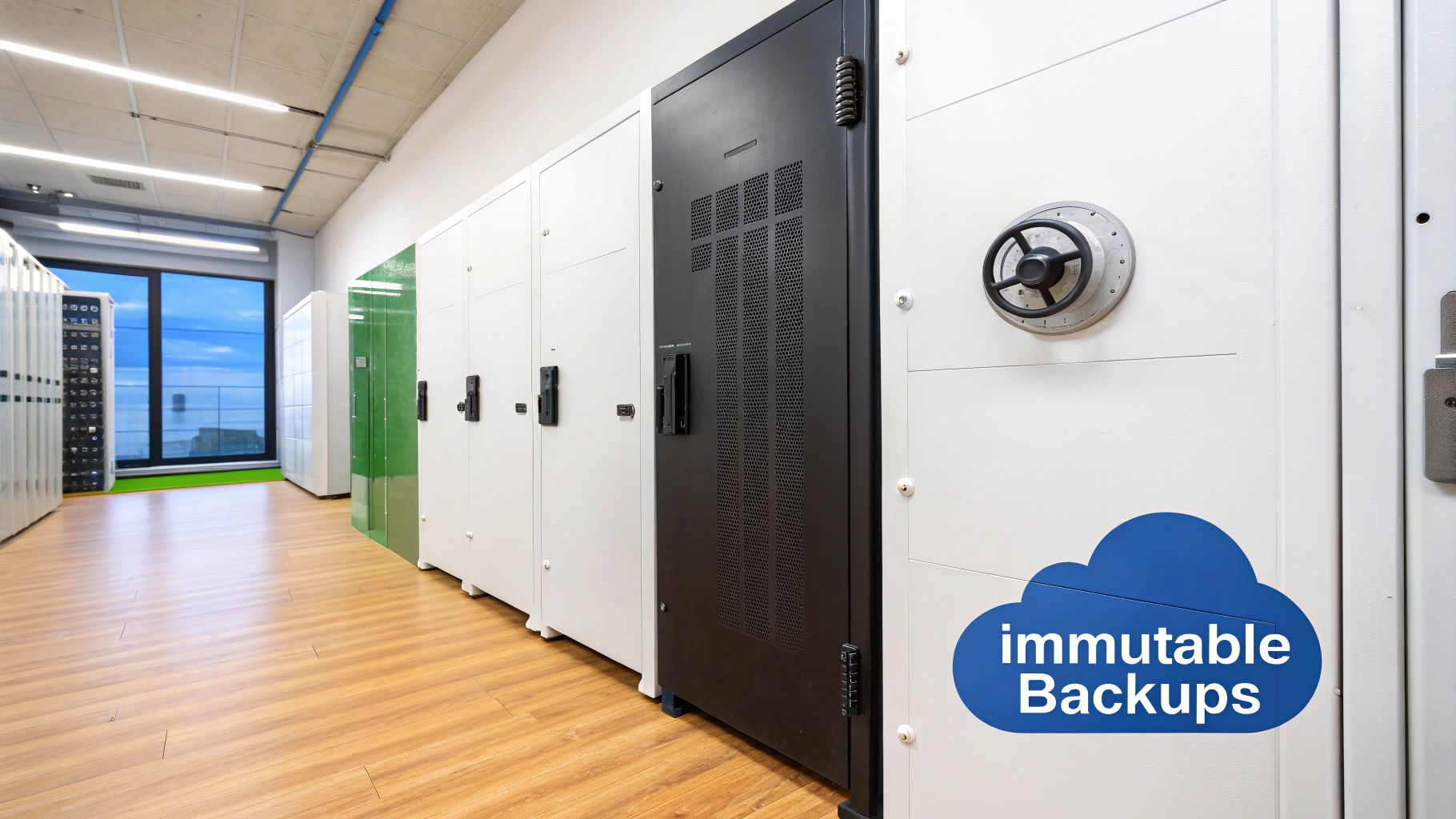
This practice works because it messes up the attacker's whole plan. A big step forward here is using immutable storage. This means once a backup is saved, it can't be changed or deleted for a set amount of time. This stops ransomware that tries to find and destroy your backups to make sure you can't recover. For MSPs and vCISOs, using the 3-2-1 backup rule is essential. Keep three copies of your data on two different types of storage, with one copy offsite.
Enforce Multi-Factor Authentication (MFA) Everywhere
Stolen passwords are a top way attackers get in. Multi-Factor Authentication (MFA) stops this by making users prove who they are in more than one way. Even if an attacker steals a password, MFA is like a locked door they can't get through.

MFA is a must-have for modern security and one of the best ransomware prevention best practices. Microsoft says MFA blocks 99.9% of attacks that use stolen passwords. For MSPs and vCISOs, MFA shouldn't be optional; it should be mandatory for everything, especially for admin accounts and any system that faces the internet. Any service without MFA is a huge risk you can't afford.
Strengthen Email Security and Advanced Threat Detection
Email is still the number one way ransomware gets delivered. Attackers use fake emails with bad links and attachments to trick people. This means you need more than a basic spam filter. Advanced tools can spot these threats before they even get to someone's inbox.
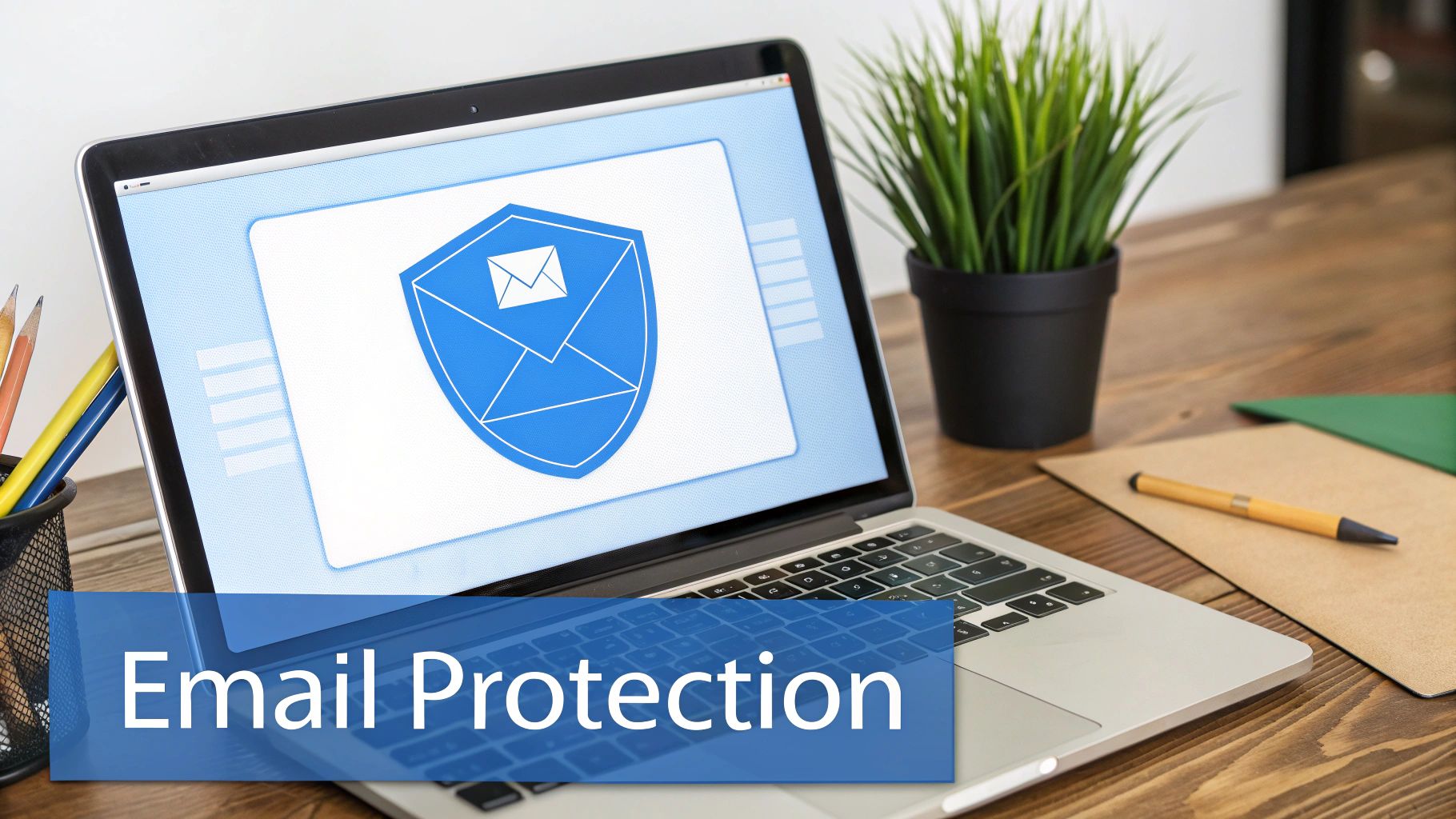
Modern email security tools use smart technology to check attachments and links in a safe space first. This stops bad files from ever reaching your users, which cuts off the ransomware attack right at the start. For MSPs and vCISOs, it’s about layering your defenses. Use technical tools like a DMARC Checker to stop fake emails, and train users to be careful.
Deploy Endpoint Detection and Response (EDR)
Old antivirus software can't keep up with new ransomware. Endpoint Detection and Response (EDR) is the upgrade you need. Think of it like a security camera for every computer and server. It watches for strange behavior to stop an attack before it spreads.
EDR is a key part of ransomware prevention best practices because it spots the sneaky things that old tools miss. For example, it can see if a normal tool like PowerShell is being used in a bad way, which is a common hacker trick. It can quickly isolate a computer that's been infected, stopping the problem from spreading across the network. For MSPs and vCISOs, EDR is a must-have to move from just reacting to problems to actively hunting for threats.
Adopt Network Segmentation and Zero Trust Principles
If an attacker gets into your network, you need to trap them. The old "castle-and-moat" idea of security doesn't work anymore. Network segmentation and a Zero Trust approach fix this. They work by assuming no one and nothing is automatically trusted, which makes it very hard for attackers to move around.
Network segmentation breaks your network into small, separate zones. Zero Trust adds another layer by checking everyone's identity and permissions for every single action. If one computer gets infected, these controls keep the ransomware from spreading to important servers or data. For MSPs and vCISOs, this "never trust, always verify" mindset is the way to go. You can learn more about network segmentation best practices to help build your strategy.
Manage Privileged Access and Enforce Least Privilege
Ransomware attackers want full control, so they go after powerful accounts like administrator accounts. Privileged Access Management (PAM) helps lock down these accounts. It makes it much harder for attackers to get the control they need to launch their malware everywhere.
This is a core part of modern ransomware prevention best practices. PAM is all about the principle of least privilege, which means people should only have the minimum permissions they need to do their job. Instead of giving people admin access all the time, you can give it to them just when they need it. For vCISOs and MSPs, PAM is a smart way to protect your clients' most important systems.
Maintain Consistent Vulnerability and Patch Management
Out-of-date software is like an unlocked door for attackers. A good process for finding and fixing these weaknesses is essential. This is one of the most important ransomware prevention best practices because it closes the entry points that attackers love to use.
It’s more than just scanning. It's a cycle of finding your systems, checking for problems, figuring out which ones are most serious, and patching them fast. For vCISOs, you need to have clear rules for how quickly patches get applied. Critical problems should be fixed in a day or two. This proactive approach helps you find weak spots before attackers do. You can learn more about the relationship between penetration testing and vulnerability assessment to help validate your controls.
Conduct Ongoing Security Awareness and User Training
Your security tools are important, but people are often the weakest link. One employee clicking a bad link can cause a huge problem. That's why good security training is a key part of any ransomware prevention plan. It deals with the human side of security.
Training turns your employees from a risk into your first line of defense. The goal is to create a culture where everyone knows how to spot and report threats like fake emails. For MSPs and vCISOs, ongoing training is much better than a once-a-year meeting. Regular fake phishing tests help you see who needs more training. You can learn more about what security awareness training is and how to build a strong program.
Prepare and Practice Your Incident Response Plan
You can't prevent every attack, so you need a plan for when one happens. A good Incident Response (IR) plan turns chaos into a calm, organized response. When ransomware hits, the first few hours are critical. A plan tells everyone exactly what to do to stop the attack and get back to business.
This is a vital part of ransomware prevention best practices because it prepares you for the worst. For MSPs and vCISOs, an IR plan shows your clients you are prepared. It should be written down and practiced regularly with drills. After any real event, it's important that your team is conducting after-action reviews to learn and improve.
Use Application Whitelisting and Execution Control
Instead of trying to block all the bad software out there, application whitelisting does the opposite. It only allows approved, trusted programs to run. Anything else is blocked automatically. This is a very powerful way to stop ransomware.
This is one of the most effective ransomware prevention best practices because it shrinks your attack surface. Even if a user downloads something bad, it can't run because it's not on the approved list. This can stop brand-new threats just as easily as old ones. For MSPs and vCISOs, this is a smart move towards a Zero Trust model, where nothing is trusted by default.
Validate Your Defenses With a True Partner
Putting these ransomware prevention best practices in place is a huge step. You've built a strong defense with MFA, network segmentation, EDR, and user training. You've set up backups and have an incident response plan ready. These actions actively protect your clients from major problems.
But building the defense is only the first part. You also need to know for sure that it works. How do you know your controls are set up right? Are you sure there isn't one small vulnerability an attacker could use? This is where a proper risk assessment and penetration testing come in. For an MSP or vCISO, proving your security works is a big advantage. It’s also required for compliance frameworks like SOC 2, HIPAA, PCI DSS, and ISO 27001.
Think of it like a quality check for your security. A good manual pentesting engagement acts like a real attacker to find weaknesses that automated tools miss. It proves that your ransomware prevention best practices are actually working together. The goal is to find your weak spots before criminals do.
As a channel-only partner, we are here to support your reseller business, not compete with it. We know MSPs and vCISOs have to deal with high prices, long waits, and confusing reports from other vendors. We offer a better way: affordable, fast, manual pentesting from our certified team (OSCP, CEH, CREST). We provide detailed, white-label pentesting reports you can put your own brand on. This helps you build trust, meet compliance needs, and make your client relationships stronger.
Ready to prove your security controls are effective? Discover how our channel-only pentesting offers affordable, fast, and manual penetration testing for MSPs and vCISOs. See our pentest partner program and turn your security work into a proven advantage.

.avif)
.png)
.png)
.png)

