
Phishing isn't just an annoying email; it's a massive threat to Managed Service Providers (MSPs) and your clients. Hackers are always inventing new ways to trick employees and steal data. For MSPs, vCISOs, and GRC companies who manage compliance like SOC 2 or HIPAA, understanding the many types of phishing is the first step to building a solid defense. One successful attack on a client can hurt your reputation and your business.
The security industry often has long wait times and high prices for a penetration test. We do things differently. We provide fast, affordable, manual pentesting from certified pros (OSCP, CEH, CREST). You can offer these services as your own with our white-label pentesting program, making your security offerings stronger without the extra cost. We are a channel-only partner, so our success is your success. We never compete with our MSP clients.
This guide explains the most important types of phishing you need to know to protect your clients and grow your business. We'll look at how these attacks work, what they look like, and how a good penetration testing program can find these risks before hackers do. From spear phishing to vishing, knowing your enemy is key for any risk assessment.
Understanding Spear Phishing Attacks
Spear phishing is one of the most effective types of phishing because it's personal. Instead of sending thousands of random emails, a hacker targets specific people or companies. The trick is personalization. Hackers research their targets, finding names, job titles, and even recent company news to create a believable email.
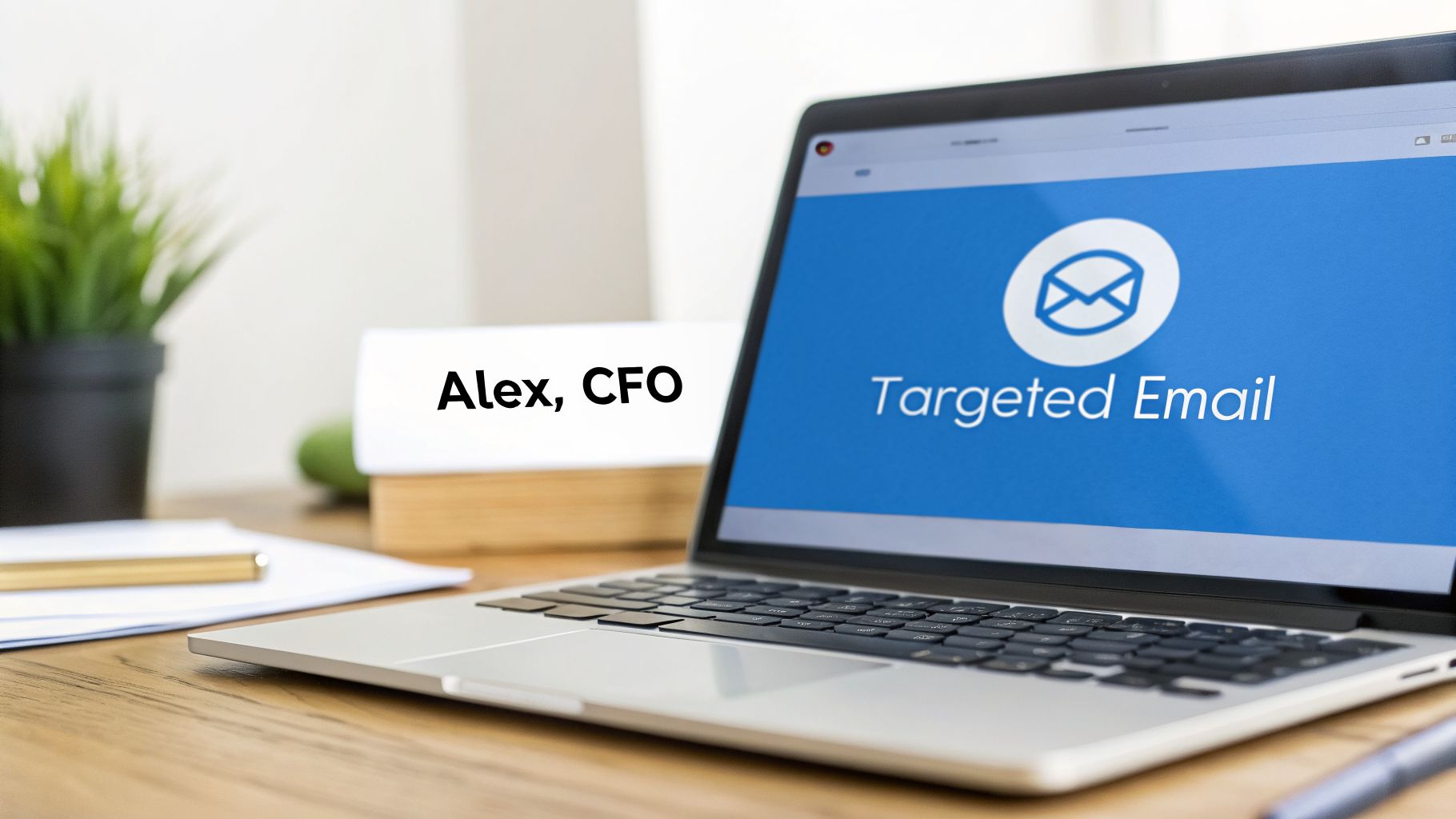
This method is very successful. For an MSP, this could be an email to an account manager that looks like it's from a trusted software vendor with a fake invoice. Another example is a finance employee getting an urgent payment request from a fake email address that looks like the company's CFO. This level of detail makes it a go-to tactic for attackers trying to get initial access.
For MSPs, simulating spear phishing during a penetration test is incredibly valuable. It tests both the client's employees and their security tech. To run a realistic spear phishing campaign during a pen test, you would research targets on sites like LinkedIn. You could then send fake payroll emails at the end of a pay period. Documenting who clicks links or gives up passwords gives your client actionable data to improve their security and meet compliance rules for SOC 2 and HIPAA.
Explaining Business Email Compromise (BEC)
Business Email Compromise (BEC) is a very targeted and damaging type of phishing. A hacker pretends to be a top executive or a trusted business partner to trick an organization into sending money or sensitive data. BEC attacks rely on social engineering and research, not just tech tricks. The goal is almost always to steal money directly.
For an MSP or its clients, a typical BEC attack involves an email that looks like it's from the CEO. The email urgently tells the finance department to wire money for a secret project. Another common tactic is hacking a real partner's email to send a fake invoice with new bank details. The FBI reports that BEC has caused billions in losses because it exploits trust and urgency.
When doing a penetration test, simulating a BEC attack is vital for any client worried about SOC 2 or PCI DSS compliance. It directly tests their financial controls and employee training. To run a convincing simulation, our pentesters might use a slightly misspelled domain or a spoofed display name that looks just like a real executive's email. This gives your client clear insights to make their security stronger.
Defending Against Clone and Typosquatting Phishing
Clone phishing is a tricky method where hackers copy a real email that was already sent. They then replace a safe link or attachment with a malicious one. This is one of the sneakiest types of phishing because the target gets an email that looks almost exactly like one they've seen before, which builds trust. Related to this are typosquatting attacks, where hackers register domain names with common spelling mistakes to trick users.
These methods work because the changes are so small that most people miss them. For example, a hacker could clone an automated invoice email from a vendor like Microsoft, change the payment link to a phishing site, and send it again. For an MSP, a hacker might clone a real message to a client, asking for network credentials with a believable story.
For MSPs doing a penetration test, these techniques are great for testing a client's security awareness and email filters. A pen test can involve cloning real company emails, like HR announcements. Our certified testers might register a typosquatted domain to host a fake login page. By showing which users fall for it, you give concrete data that helps the client meet compliance needs for frameworks like SOC 2 and PCI DSS.
Protecting Executives From Whaling Attacks
Whaling is a special form of spear phishing that targets the "big fish" in a company: top executives and senior managers. This attack, also called CEO fraud, is dangerous because it uses the authority of executives and their access to sensitive company information. Attackers research their targets deeply to create urgent and believable requests, making it one of the most expensive types of phishing.

A common whaling scenario involves a hacker, pretending to be the CEO, emailing the finance department with an urgent request for a wire transfer to a new vendor. Attackers often use lookalike domains to seem more legitimate, which is why understanding what is typosquatting and how to stop it is so important for security. Whaling attacks work because they play on human psychology; the sense of urgency from a boss makes employees act fast without asking questions.
For MSPs, a whaling simulation during a penetration test is key. It tests how well financial controls and employee training stand up to smart social engineering. To run a good whaling pen test, our team researches the executive team and creates a scenario that demands quick action. This gives you clear proof of any weaknesses, helping your client strengthen their security policies for SOC 2 and PCI DSS compliance.
How Vishing or Voice Phishing Works
Vishing, or voice phishing, is one of the more personal types of phishing that skips email filters completely. Attackers use phone calls to talk directly to their targets, pretending to be from IT support, a bank, or even the government. This method works because people naturally trust a human voice, creating a sense of urgency that text-based attacks can't match.
Because vishing bypasses email security, it's very effective. For example, a hacker might fake the caller ID to look like your company's IT helpdesk, calling an employee to "fix a network issue" and asking for their login details. Another common trick is a fake "fraud alert" call from a bank, tricking the victim into "verifying" their account details. To learn more about how these attacks work, you can explore the details of a vishing attack.
For MSPs, running a vishing campaign as part of a penetration test is a must for testing the human side of a client's security. It checks how well security training is working. To run a convincing vishing pen test, our testers use caller ID spoofing and a detailed script. Documenting which employees give away information shows real vulnerabilities and helps clients meet SOC 2 and HIPAA compliance standards.
Identifying Smishing or SMS Phishing
Smishing moves phishing from your email to your phone, using text messages (SMS) to trick you. This is another major type of phishing that has grown because people tend to trust texts more than emails. Hackers use the high open rates of text messages and the lack of security awareness on mobile devices to steal login info or deliver malware. The messages are short and urgent to make you act without thinking.
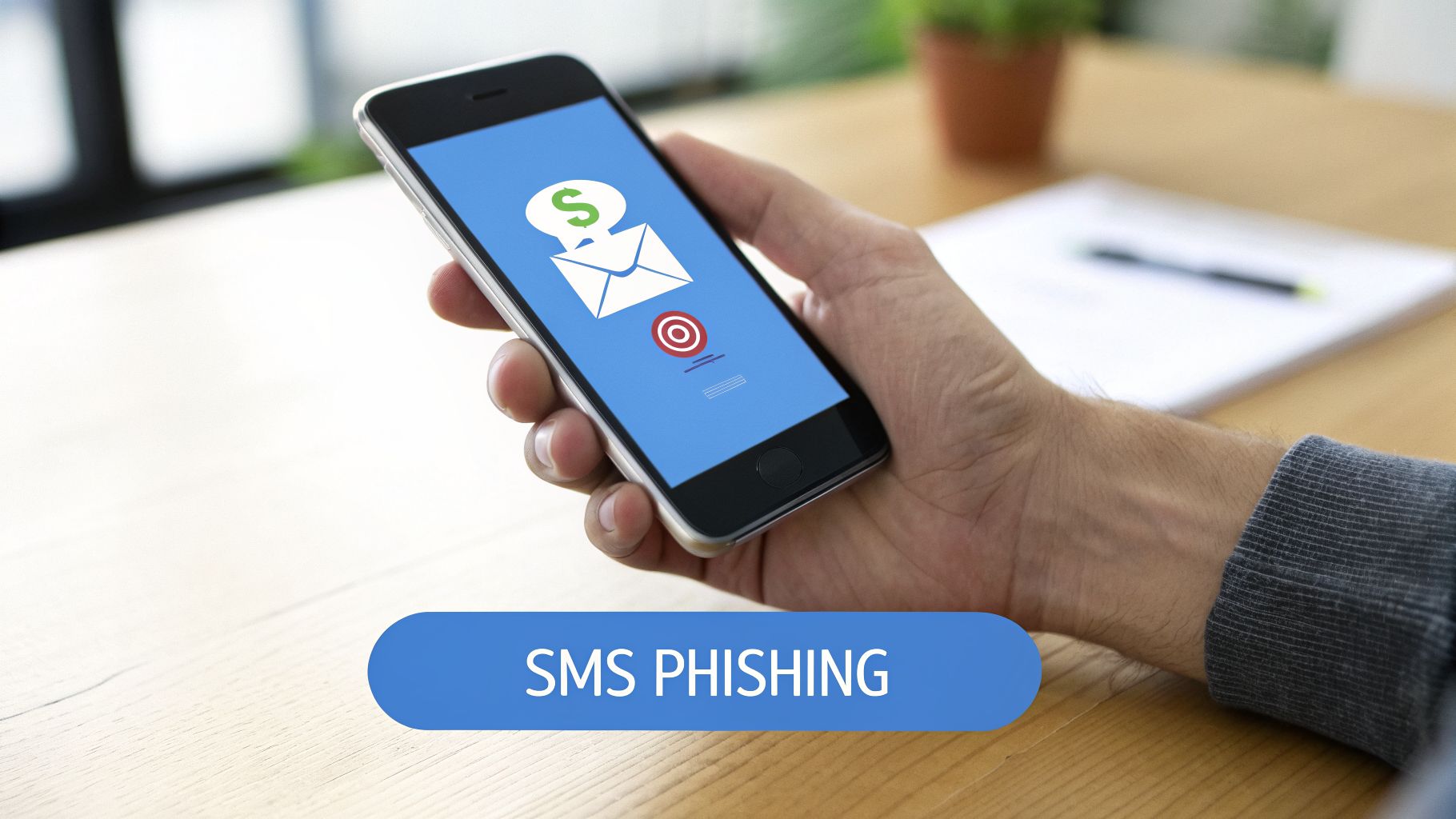
The attacks can be very creative. You might get a fake package delivery notice with a malicious link, or an urgent alert from your bank about suspicious activity. Smishing is especially dangerous for getting around multi-factor authentication (MFA). A hacker who has a password can send a text pretending to be IT, asking the user to reply with the MFA code they just received to "validate their session."
For MSPs, a smishing simulation is a key part of a modern penetration test. It checks how employees handle threats on their mobile devices. To run an effective smishing pen test, our pentesters use short URLs and create messages that look like they're from services the client's employees use. This data proves the need for better mobile security and comprehensive security awareness training to meet SOC 2 and HIPAA compliance.
Preventing Angler Phishing on Social Media
Angler phishing is a clever type of phishing that happens on social media. Hackers create fake brand accounts and "angle" for victims by watching for public complaints. They use the public nature of these complaints and customers' desire for fast support to start a scam. They pretend to be official customer service reps to build trust quickly.
This method is dangerous because it's interactive and happens in real-time. For example, a customer might tweet a complaint at their bank. A hacker posing as the bank's support team replies, asking the user to send a direct message (DM) to "fix the issue." In the private DM, they ask for sensitive information like account numbers or passwords.
For MSPs performing a penetration test, an angler phishing simulation is a great way to test a company's social media security awareness. The pen test can target employees who manage company social media accounts. An ethical hacker might create a fake profile pretending to be a key vendor to get internal information from an employee. Documenting these interactions shows security gaps and helps clients improve their digital presence for SOC 2 compliance.
Stopping Watering Hole Attacks
A watering hole attack is one of the more patient types of phishing. Instead of sending emails, hackers compromise legitimate websites that they know their targets often visit. The name comes from predators waiting at a watering hole for their prey. Hackers put malicious code on these trusted sites to steal credentials or deliver malware.
This method is effective because users trust familiar websites. For example, hackers might compromise an industry association's website to target its members. For an MSP's client, this could mean an employee visits a trusted supplier's portal and has their credentials stolen by a malicious form on the login page. This shows that strong email defenses alone are not enough.
For MSPs running a penetration test, a simulated watering hole attack is an advanced technique that tests web filtering and endpoint detection. During a pen test, our pentesters identify industry websites that the client's staff visit. With permission, we can set up a clone of the site to see who visits and interacts with it. The results provide critical data for improving security and meeting compliance standards like PCI DSS and ISO 27001.
Recognizing Pretexting in Social Engineering
Pretexting is a social engineering technique where attackers create a fake story, or pretext, to trick a target into giving up information. Pretexting makes other types of phishing more powerful by building a believable backstory. This makes the phishing email, text, or call seem legitimate and urgent.
This method works because it exploits human trust. For example, a hacker might call an employee pretending to be an IT tech doing an urgent security audit, asking for their password to "verify their account." Another common pretext involves a hacker pretending to be a new employee who needs help accessing a system, tricking an HR or IT team member into giving them access.
For an MSP conducting a penetration test, a pretexting scenario can find big gaps in a client's security awareness. To run a successful pretexting engagement as part of a pen test, our team researches the target's company structure. We then create a detailed backstory, maybe posing as a vendor, to make the interaction believable. This helps your client strengthen their security and meet SOC 2 or HIPAA training requirements. Learn more about effective social engineering tactics.
Avoiding Malware-Based Phishing Payloads
Unlike attacks that just steal passwords, malware-based phishing tries to install malicious code on a target's system. The goal isn't to get a password but to convince a user to run a file. Attackers use social engineering to deliver malware through email attachments or malicious links to get a foothold on the network.
These attacks are responsible for some of the most destructive threats, including ransomware. A common example is an HR team member getting a resume as a PDF that installs a virus when opened. Another is a fake invoice sent as an Excel file that, when activated, deploys a trojan. The widespread use of malware makes this one of the most critical types of phishing to defend against.
For MSPs doing a penetration test, simulating a malware-based phishing campaign is essential for testing endpoint security and user awareness. During a pen test, we can create a safe payload that acts like malware to see if security tools catch it. Documenting whether the payload runs provides key insights for strengthening security and meeting SOC 2 or PCI DSS requirements. To build a stronger defense, it's also important to understand ransomware prevention best practices.
Partner With Us to Secure Your Clients
You've now seen the many ways hackers use phishing to attack businesses. From targeted spear phishing aimed at executives to the widespread scams of vishing and smishing, these methods are getting more convincing. Knowing these different types of phishing is the first step for any MSP, vCISO, or GRC professional. But knowledge alone isn't enough to protect your clients.
The real test is simulating these attacks to see how your clients' defenses hold up. This is where a proper risk assessment, driven by a manual penetration test, is so important. A simulated attack can find weaknesses that automated scanners miss. For your clients who need to meet compliance standards like SOC 2, HIPAA, PCI DSS, or ISO 27001, a manual pentest is often required.
As a trusted advisor, your job is to turn this knowledge into a real security plan. The problem is that the penetration testing industry often has high prices and long wait times. We built our service to solve this problem for partners like you. We offer an affordable, fast, and completely white-label pentesting solution that fits right into your services.
We are here to empower you, not compete with you. That's why we are a channel-only partner. Our OSCP, CEH, and CREST certified pentesters use manual techniques to find what automated tools can't. You get detailed reports that you can brand as your own, and you get them quickly. This speed and affordability let you offer more frequent pen testing, helping your clients build stronger security over time. By partnering with us, you add a high-value service to your offerings without the cost of an in-house team. You become the go-to resource your clients need for their security and compliance challenges.
Ready to turn your knowledge of phishing into a profitable service for your clients? MSP Pentesting provides the fast, affordable, and channel-only white label pentesting solution you need. Contact us today to learn how our manual penetration testing can help you validate your clients' defenses against the very types of phishing discussed in this article.

.avif)
.png)
.png)
.png)

